$ sign for Savings

Savings

Understanding the Value of Electrification

Fleet electrification can deliver long-term financial and operational benefits. From lower fuel and maintenance costs to available rebates and grants, electrification opens the door to meaningful savings over time. Here, you’ll find tools and resources that make it easy to estimate total costs, compare technologies, and explore funding opportunities—helping you plan your fleet’s transition with clarity and confidence.

Fuel Switching Rate Calculators

As the transportation sector accelerates toward electrification, utilities, government agencies, and fleet partners are providing tools to help organizations make informed decisions about fuel switching. These calculators estimate the financial, environmental, and operational impacts of moving from traditional internal combustion engine (ICE) vehicles to electric alternatives. Whether through simple cost comparisons or full planning platforms, they all share a common purpose — to deliver clear, data-driven insights that support cleaner and more cost-effective mobility choices.

Featured Tools

Savings, Benefits, and Incentives

ComEd logo

ComEd offers a comprehensive electric vehicle (EV) Toolkit for northern Illinois customers to explore cost savings and incentives. Users can estimate fuel cost reductions, view available EV models and chargers, and locate public charging stations. The Toolkit also provides information on state and federal rebates, tax credits, and EV-specific rate options, helping both residential and commercial users reduce barriers to adoption.

Build a Plan with PG&E

Pacific Gas & Electric (PG&E) logo

Pacific Gas & Electric (PG&E)’s Fleet Electrification Planning Tool helps fleet managers model fuel savings and emissions reductions. Users can select from multiple vehicle categories — including on-road, off-road, and transport refrigeration units (TRUs) — and enter variables such as fleet size, daily mileage, charger type, and charging windows to project annual fuel savings, electricity costs, and GHG reductions.

Vehicle Cost Calculator

DOE’s Alternative Fuels Data Center (AFDC) logo

The DOE’s Alternative Fuels Data Center (AFDC) Vehicle Cost Calculator estimates total cost of ownership and emissions for conventional, alternative-fuel, and advanced technology vehicles. Users can compare up to eight vehicles at a time by inputting driving patterns, fuel types, and regional data to evaluate efficiency and environmental performance.

EV Savings Calculator

Merchants Fleet logo

Merchants Fleet offers an interactive tool that helps fleet owners estimate cost savings from transitioning to EVs. By entering data such as local fuel prices, fuel efficiency, and annual mileage, users can calculate both total and per-vehicle savings, providing a straightforward view of the economic benefits of electrification.

EV Savings Calculator

Oak Ridge National Laboratory’s ChooseEV logo

Oak Ridge National Laboratory’s ChooseEV calculator allows users to evaluate the economic benefits of switching to electric vehicles. The tool factors in vehicle specifications, driving patterns, and regional electricity rates to produce customized savings and cost-of-ownership estimates.


EV Fuel Savings Calculator

ChargeHub logo

ChargeHub supports drivers and fleet operators with tools that streamline access to public charging infrastructure. Its platform helps users discover charging stations, manage payments, and assess cost savings — fostering greater connectivity and operational efficiency across the EV ecosystem.


Total Cost of Ownership (TCO)

Understanding the Total Cost of Ownership (TCO) helps fleets evaluate the true, long-term costs of operating different vehicle types. TCO takes into account both upfront and ongoing expenses — such as purchase price, fuel or charging costs, maintenance, insurance, and financing. By comparing these factors across technologies, fleet managers can make more informed, data-driven decisions about when and how to transition to electric vehicles.

Featured Tools

T3CO Tool

NREL logo

National Renewable Energy Laboratory (NREL)’s Transportation Technology Total Cost of Ownership (T3CO)​ tool provides a standardized method for evaluating the full life-cycle costs of advanced commercial vehicles. Designed for medium- and heavy-duty fleets, it incorporates diverse operating conditions and technology types, using industry-validated methods to close gaps found in traditional cost models.

EV Total Cost of Ownership Tool

IEA logo

The International Energy Agency (IEA)’s TCO tool allows users to assess the financial implications of electric vehicle adoption. Users can input key variables such as location, annual mileage, vehicle type, and fuel configuration to estimate ownership costs. Default assumptions simplify use while maintaining credible comparisons across markets and technologies.

TCO Calculator

Pacific Gas & Electric (PG&E) logo

Pacific Gas & Electric (PG&E)’s Total Cost of Ownership calculator helps fleet managers estimate the complete cost of owning and operating electric vehicles. The tool accounts for purchase price, maintenance, insurance, depreciation, fuel or electricity, and charging infrastructure, giving users a clear view of long-term savings potential.

Vehicle Cost Calculator

DOE’s Alternative Fuels Data Center (AFDC) logo

The DOE’s Alternative Fuels Data Center (AFDC) Vehicle Cost Calculator uses basic driving data to compare ownership costs and emissions for a range of vehicle types, including conventional, alternative fuel, and electric models. The tool helps users evaluate efficiency, total costs, and environmental impact in one easy-to-use platform.

Incentives, Rebates, & Grants

As fleets move toward electrification, a range of programs can help offset upfront costs for charging equipment and supporting infrastructure. Utilities, state agencies, and federal programs offer incentives that make it easier — and more affordable — to get started. Understanding what’s available early in the planning process can help fleets maximize savings and streamline implementation.

Infrastructure Rebates

If your electrician determines that a service upgrade or new electrical connection is needed for EV charging, you may qualify for “make-ready” funding through your local utility. These programs often cover the cost of upgrades to the distribution system — up to, but not including, the charging station itself.

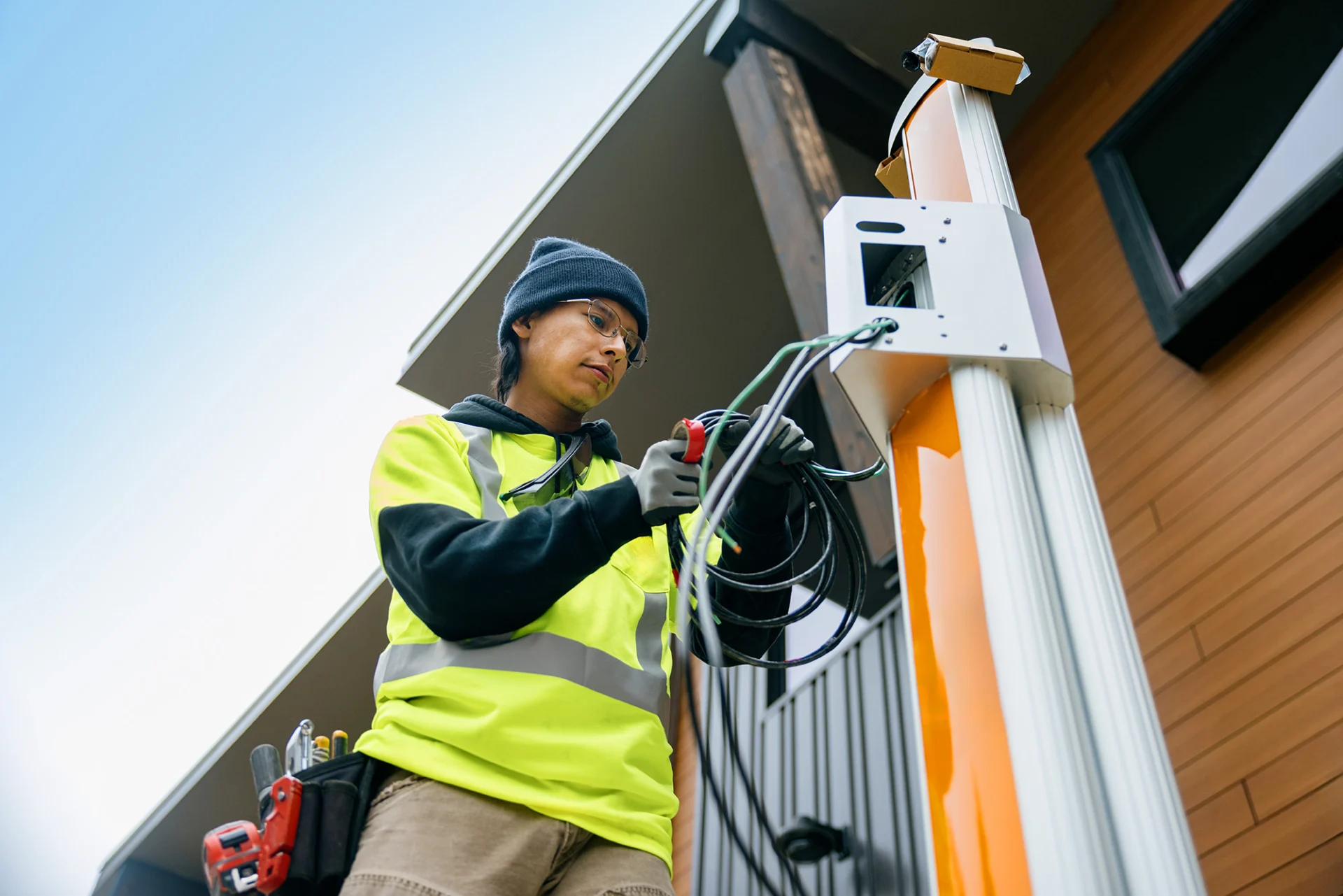
workman handling cables on vehicle charger

Charger Rebates

Many utilities, local governments, and state agencies offer rebates to reduce the cost of purchasing and installing EV charging stations. These programs can vary in structure — some provide fixed rebates for approved equipment, while others include installation support or require pre-qualification.

A helpful place to start is the Alternative Fuels Data Center, which lists available state and federal incentives. Keep in mind that funding is often first-come, first-served and may reopen periodically as new budgets or utility plans are approved.


line of vehicle chargers